The D.B. Cooper Hijacking
The Only Unsolved Commercial Airline Hijacking in U.S. History
Ask a question about this case
Ask anything and we will generate an investigative board with evidence, connections, and analysis.
Start here
3 curated boards to help you orient to this investigation.
Suspects Identified as D.B. Cooper
Overview of the principal individuals later proposed as D.B. Cooper and the directly connected evidence (witness statements, FBI files, physical items, and timeline events) tying them to the Nov 24, 1971 hijacking. Generated from question: "Who are the key suspects identified as D.B. Cooper?"
D.B. Cooper Hijacking Timeline
Chronological overview of the Nov 24, 1971 D.B. Cooper hijacking, the subsequent FBI investigation (including the 1972 McCoy copycat case), key evidence and persons, and the 2016 suspension of active investigation. Generated from question: "What is the timeline of the hijacking and investigation?"
D.B. Cooper Physical Evidence
Summarizes the physical items and forensic links tied to the Nov 24, 1971 hijacking—cigarette butts and fingerprints from Row 18, the JC Penney clip-on tie, witness-based composite descriptions, and related items from the 1972 McCoy copycat case. Generated from question: "What physical evidence exists from the hijacking?"
Investigation boards
3 focused views into this case
Suspects Identified as D.B. Cooper
Overview of the principal individuals later proposed as D.B. Cooper and the directly connected evidence (witness statements, FBI files, physical items, and timeline events) tying them to the Nov 24, 1971 hijacking. Generated from question: "Who are the key suspects identified as D.B. Cooper?"
D.B. Cooper Hijacking Timeline
Chronological overview of the Nov 24, 1971 D.B. Cooper hijacking, the subsequent FBI investigation (including the 1972 McCoy copycat case), key evidence and persons, and the 2016 suspension of active investigation. Generated from question: "What is the timeline of the hijacking and investigation?"
D.B. Cooper Physical Evidence
Summarizes the physical items and forensic links tied to the Nov 24, 1971 hijacking—cigarette butts and fingerprints from Row 18, the JC Penney clip-on tie, witness-based composite descriptions, and related items from the 1972 McCoy copycat case. Generated from question: "What physical evidence exists from the hijacking?"
Case Brief
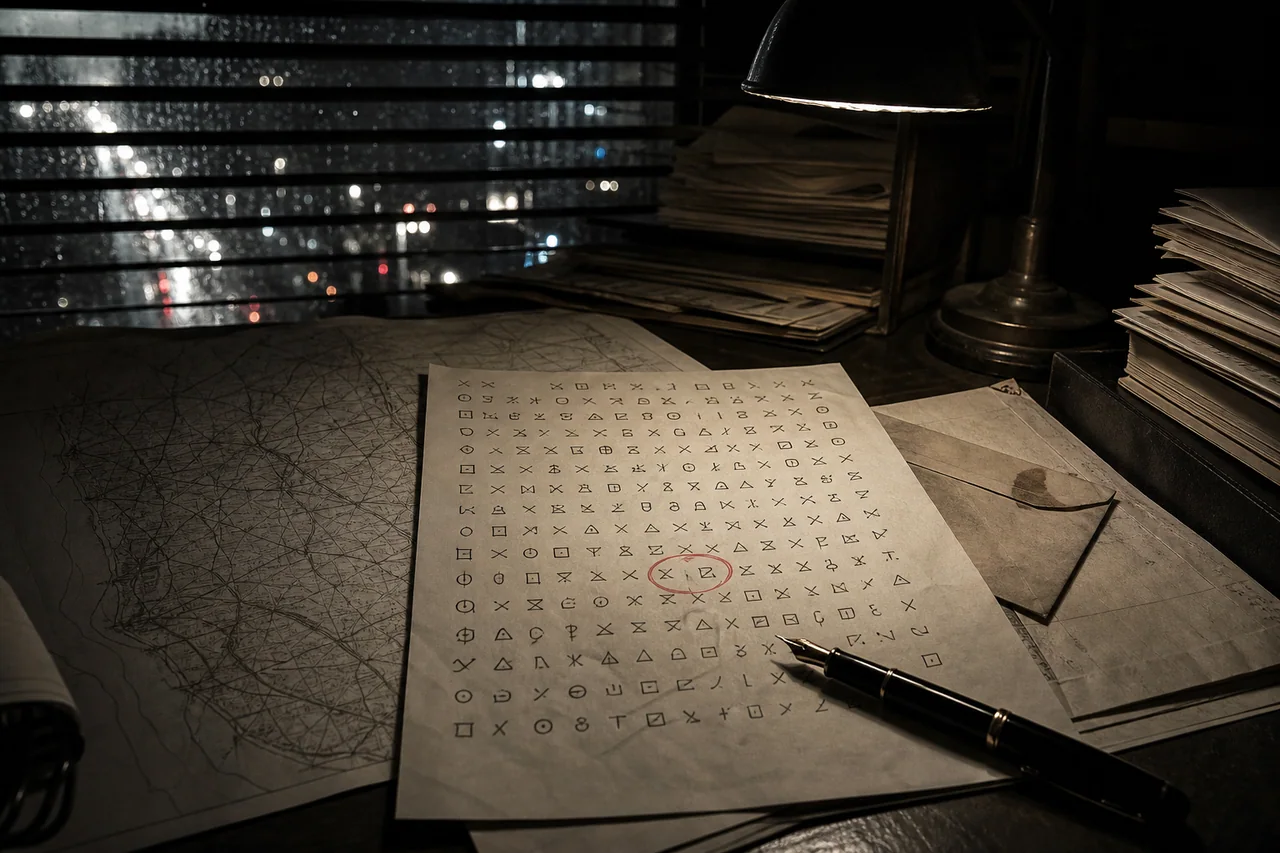
On the afternoon of November 24, 1971, a man using the alias Dan Cooper boarded Northwest Orient Airlines Flight 305 at Portland International Airport, bound for Seattle. Shortly after takeoff, he handed flight attendant Florence Schaffner a note stating he had a bomb in his briefcase. He demanded $200,000 in twenty-dollar bills and four parachutes. When the plane landed at Seattle-Tacoma International Airport, the 36 passengers were exchanged for the ransom and parachutes. Cooper then ordered the crew to fly toward Mexico City at low altitude with the landing gear deployed and the rear stairway lowered.
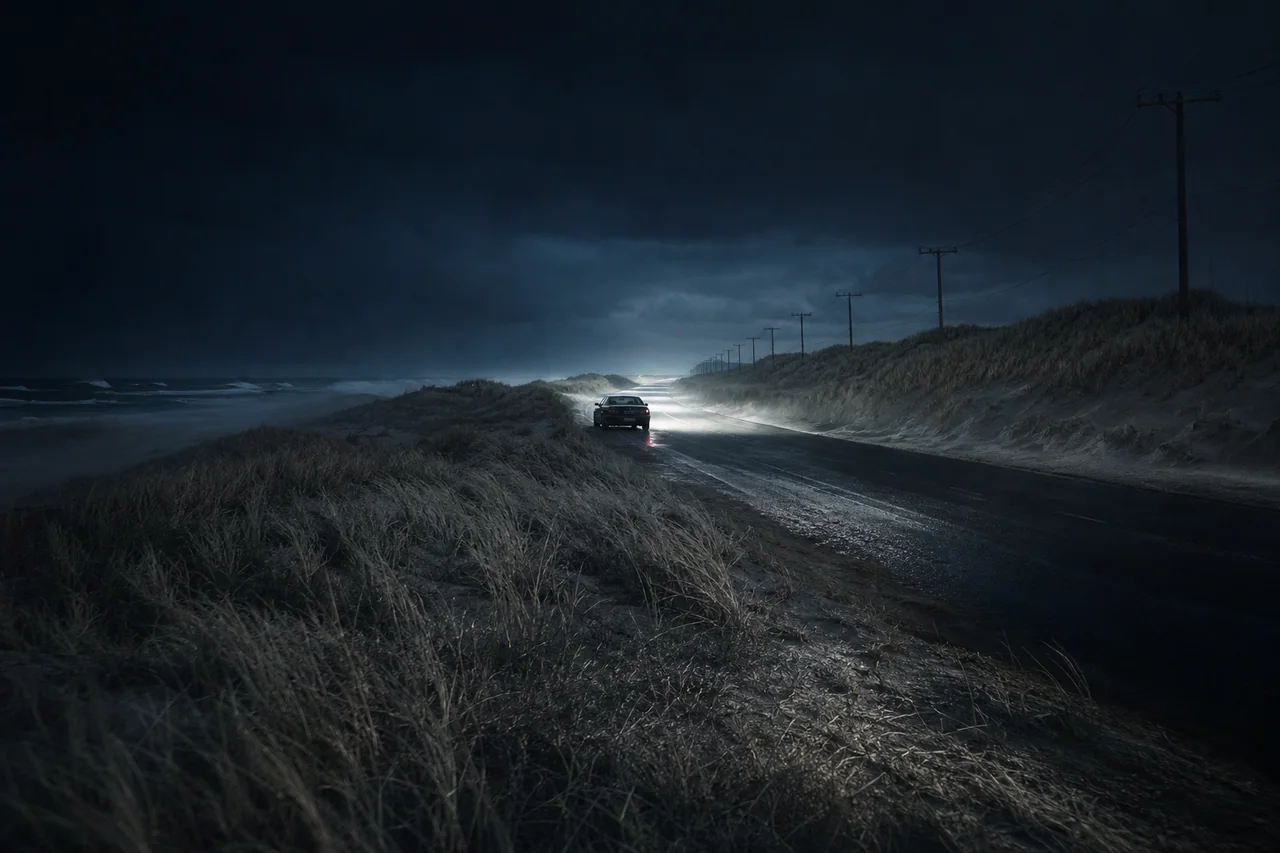
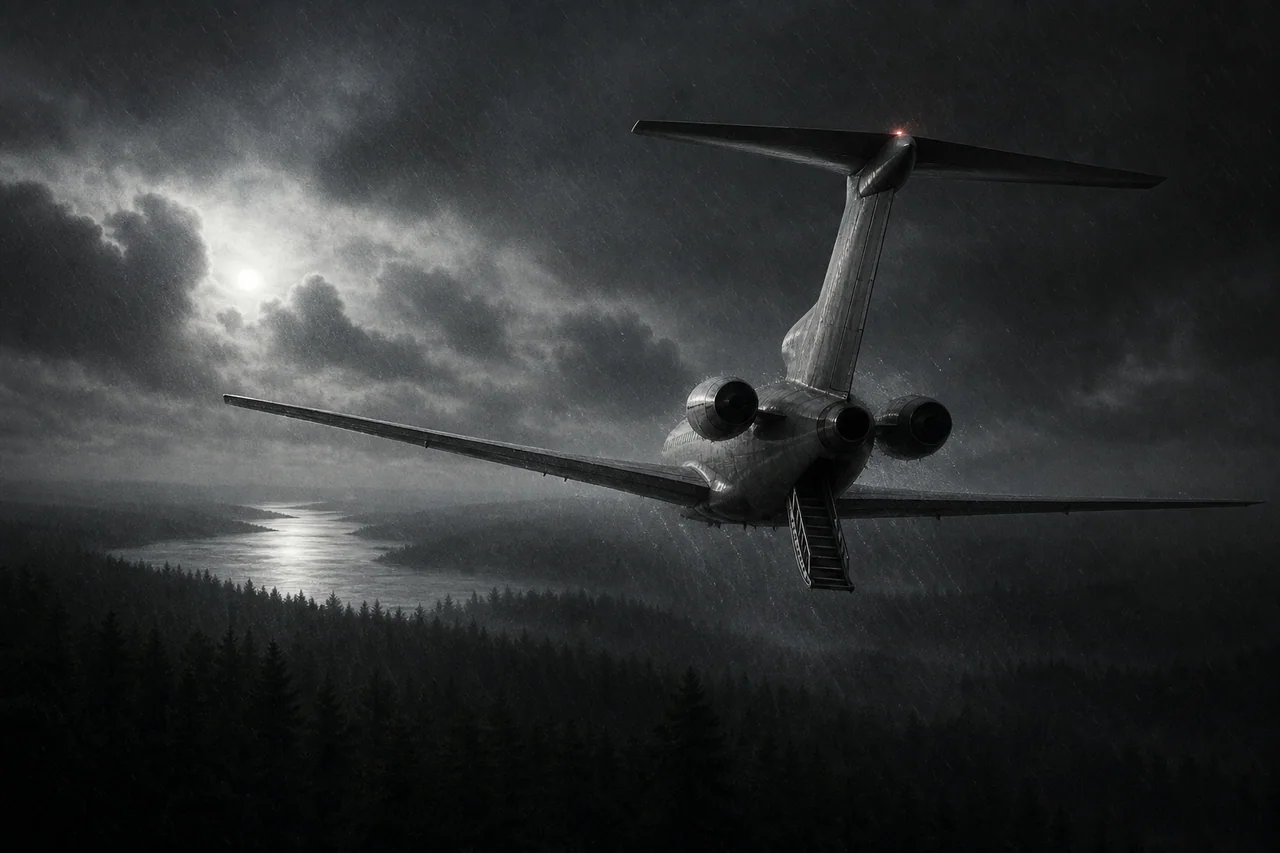
Somewhere over the forested wilderness of southwest Washington State, at approximately 8:13 p.m., Cooper jumped from the aft stairway of the Boeing 727 into a freezing rainstorm with winds of up to 200 miles per hour. He carried the $200,000 ransom strapped to his body and wore a business suit, loafers, and a trench coat — no survival gear. He was never seen again. The FBI launched one of the longest and most exhaustive investigations in its history, codenamed NORJAK. Over 45 years, agents pursued more than 800 suspects, conducted extensive ground searches, and followed thousands of leads across the country.
The only physical break came in February 1980, when eight-year-old Brian Ingram found three deteriorating packets of ransom bills totaling $5,800 buried on the banks of the Columbia River at a site known as Tena Bar, roughly nine miles downstream from Vancouver, Washington. The discovery deepened the mystery: the bills' location was inconsistent with the FBI's projected drop zone near Lake Merwin and Ariel, Washington. Cooper's black JC Penney clip-on tie, left on the plane, was later found to contain over 100,000 microscopic particles of rare metals including pure titanium, cerium, and strontium sulfide — compounds associated with specialized aerospace manufacturing.
In July 2016, after 45 years, the FBI officially suspended active investigation of the case, though it stated it would continue to accept credible physical evidence related to the parachutes or the ransom money. The hijacker's true identity remains unknown. No confirmed remains, parachute equipment, or additional ransom money have ever been recovered. The case remains the only documented unsolved act of air piracy in commercial aviation history.
Evidence Archive
12
Documents
12
People
8
Locations
4
Timeline Events
7
Notes
Key Figures
Key Locations
Tena Bar — Ransom Money Discovery Site
12500 Northwest Lower River Road, Vancouver, Washington 98660, United States, Vancouver, Washington
Reno-Tahoe International Airport (RNO)
659 South Rock Boulevard, Reno, Nevada 89502, United States, Reno, Nevada
Seattle-Tacoma International Airport (SEA)
2400 South 170th Street, SeaTac, Washington 98158, United States, SeaTac, Washington
Portland International Airport (PDX)
7210 Northeast Airport Way, Portland, Oregon 97218, United States, Portland, Oregon
Suspected Drop Zone — Ariel / Lake Merwin Area
105 Merwin Hatchery Drive, Woodland, Washington 98674, United States, Ariel, Washington
Victor 23 (V-23) Airway — Flight Path
Logging 1600 Road, Kalama, Washington 98625, United States, Castle Rock, Washington
Woodland, Washington — Ground Search Command Post
113 Vista Drive, Woodland, Washington 98674, United States, Woodland, Washington
FBI Seattle Field Office
909 5th Avenue, Seattle, Washington 98164, United States, Seattle, Washington
Timeline Highlights
Nov 24, 1971
The Hijacking — November 24, 1971
2:50 PM — Dan Cooper boards Flight 305 at Portland International Airport, pays $18.52 cash for a one-way ticket to Seattle. 3:07 PM — Flight departs Portland with 37 passengers and 6 crew members. ~3:15 PM — Cooper hands a note to flight attendant Florence Schaffner stating he has a bomb. He opens his briefcase to show her red cylinders, a battery, and wires. ~3:30 PM — Cooper's demands relayed to the cockpit: $200,000 in $20 bills and four parachutes. 5:24 PM — Flight 305 lands at Seattle-Tacoma Airport. The plane circles for nearly two hours while the FBI assembles the ransom. 5:45 PM — Ransom money (10,000 $20 bills, serial numbers recorded) and four parachutes delivered to the aircraft. ~6:00 PM — 36 passengers and flight attendants Schaffner and Hancock deplane. Cooper retains pilot Scott, co-pilot Rataczak, flight engineer Anderson, and attendant Mucklow. 7:40 PM — Flight 305 departs Seattle toward Mexico City. Cooper specifies: flaps 15 degrees, gear down, cabin unpressurized, altitude under 10,000 feet, speed under 200 knots. ~8:00 PM — Cooper orders Mucklow to join the flight crew in the cockpit and close the curtain. 8:13 PM — Cockpit instruments register a change in air pressure and a slight oscillation of the aircraft. The aft stairs have been lowered. Cooper has jumped.
Nov 24, 1971
Flight 305 Landing at Reno — Cooper Confirmed Gone
At 11:02 p.m. PST on November 24, 1971, Northwest Orient Airlines Flight 305 landed at Reno-Tahoe International Airport with its aft airstair still deployed. Captain William Scott and First Officer William Rataczak taxied the aircraft to a stop on the tarmac. Scott left the cockpit and searched the passenger cabin, confirming that Cooper was no longer aboard. The remaining crew — Rataczak, flight engineer Harold Anderson, and flight attendant Tina Mucklow — had been confined to the cockpit since approximately 8:00 p.m. and had not seen Cooper since Mucklow last observed him standing near Row 18 with the parachute on his back and the money bag tethered to his waist. An FBI bomb squad was dispatched to search the aircraft. After a 30-minute sweep, the cabin was declared safe. Forensic teams then conducted a thorough examination of the aircraft interior, recovering Cooper's clip-on tie from the seat, eight cigarette butts from the ashtray at his row, 66 fingerprints from various surfaces, and two of the four parachutes. The money and two parachutes were gone. Cooper had vanished somewhere over the dark, storm-lashed forests of southwest Washington.
Nov 1, 1978
Boeing 727 Aft Stair Placard — Found 1978
In November 1978, seven years after the hijacking, a deer hunter found a plastic instruction placard near a logging road approximately 13 miles east of Castle Rock, in Cowlitz County, Washington. The placard contained printed instructions for operating the aft ventral airstair on a Boeing 727. FBI analysis confirmed the placard came from the aircraft used for Flight 305 (N467US). The discovery was significant for two reasons: it was the first physical evidence from the hijacking found outside the aircraft, and its location was within the Victor 23 airway flight path, consistent with the route Flight 305 took from Seattle toward Reno. The placard had apparently become detached from the aft stair mechanism when Cooper lowered the stairs during flight. Despite the promising location, the discovery generated no new leads regarding Cooper's precise landing site, as the placard could have detached at any point after the stairs were deployed and drifted in the wind before landing.
Feb 10, 1980
Ransom Money Recovery at Tena Bar
On February 10, 1980, eight-year-old Brian Ingram was smoothing sand for a campfire with his family on the north bank of the Columbia River at a site known as Tena Bar, approximately nine miles downstream from Vancouver, Washington. He uncovered three packets of heavily deteriorated twenty-dollar bills buried several inches below the surface. FBI technicians confirmed the $5,800 (290 bills) matched the serial numbers of the ransom money given to Cooper on November 24, 1971. The bills were arranged in the same sequence as when originally bundled by the Seattle branch of the Federal Reserve. The condition of the bills suggested prolonged exposure to water. The discovery raised more questions than it answered: the Tena Bar location is not consistent with the FBI's estimated drop zone near Ariel and Lake Merwin. It remains unclear whether the bills washed downstream naturally, were deposited by deliberate action, or arrived through dredging operations that had occurred on the river. No additional ransom money has ever been found. Brian Ingram was allowed to keep a portion of the bills, which he later sold at auction.
Frequently Asked Questions
What happened in the D.B. Cooper Hijacking case?
Is the D.B. Cooper Hijacking case solved?
Who are the key people in the D.B. Cooper Hijacking case?
Where did the D.B. Cooper Hijacking case take place?
When did the D.B. Cooper Hijacking case happen?
What evidence exists in the D.B. Cooper Hijacking case?
What are the main theories in the D.B. Cooper Hijacking case?
Why hasn't the D.B. Cooper Hijacking case been solved?
How can I help investigate the D.B. Cooper Hijacking case?
Help investigate this case
Join 7 investigators mapping the evidence. Ask a question, challenge a claim, or add new evidence.